
The Journal · From the shop
Why we build classic muscle in carbon fiber And why every restoration stays steel
A Trick Rides full build starts life in CAD, gets cut as a full size plug on a six axis machine, and comes out of a mold already straight. Here is what that looks like inside our Yukon shop, what it costs before a single part exists, and what it means for the car you drive home.
By Jason Engel, founderOctober 20266 minute read
The short answer
For our full builds, carbon is the more advanced way to make a body, and the more precise one. Bonded to a steel inner structure, it doesn't rust, shrugs off door dings, weighs less, and comes out of the mold straight, which skips about five and a half months of metal fabrication and bodywork. Restorations are a different job. Every classic we restore stays steel.
It starts on a screen, not on a quarter panel
Most custom bodies are still shaped by hand in steel, the way they were in 1968. Cut it, weld it, hammer it, block it, and repeat until the panel is right under paint. Done well, that's real craftsmanship, and it's how every steel car in our shop gets built. It just takes a lot of hours, and no two panels come out exactly alike.
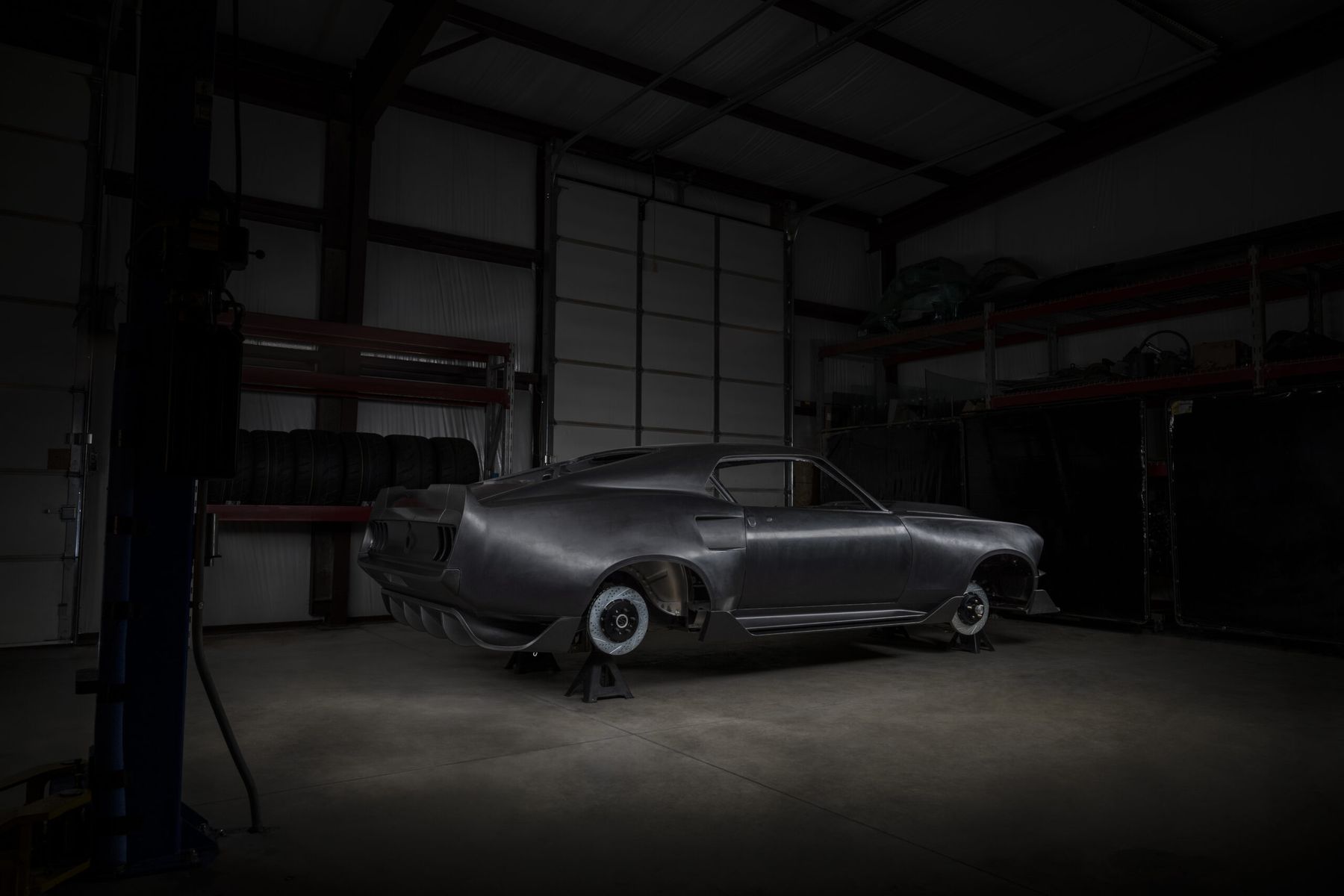
Our full builds take a different road. Every carbon panel on a Trick Rides full build starts as a digital model in CAD. When the shape is right on the screen, a block of tooling board about the size of half an office goes onto a six axis machine, and the machine cuts the plug for that panel. A quarter panel, a fender, a hood. The mold gets pulled from that plug, and every carbon part we make comes out of that mold.
What the molds cost before a single part exists
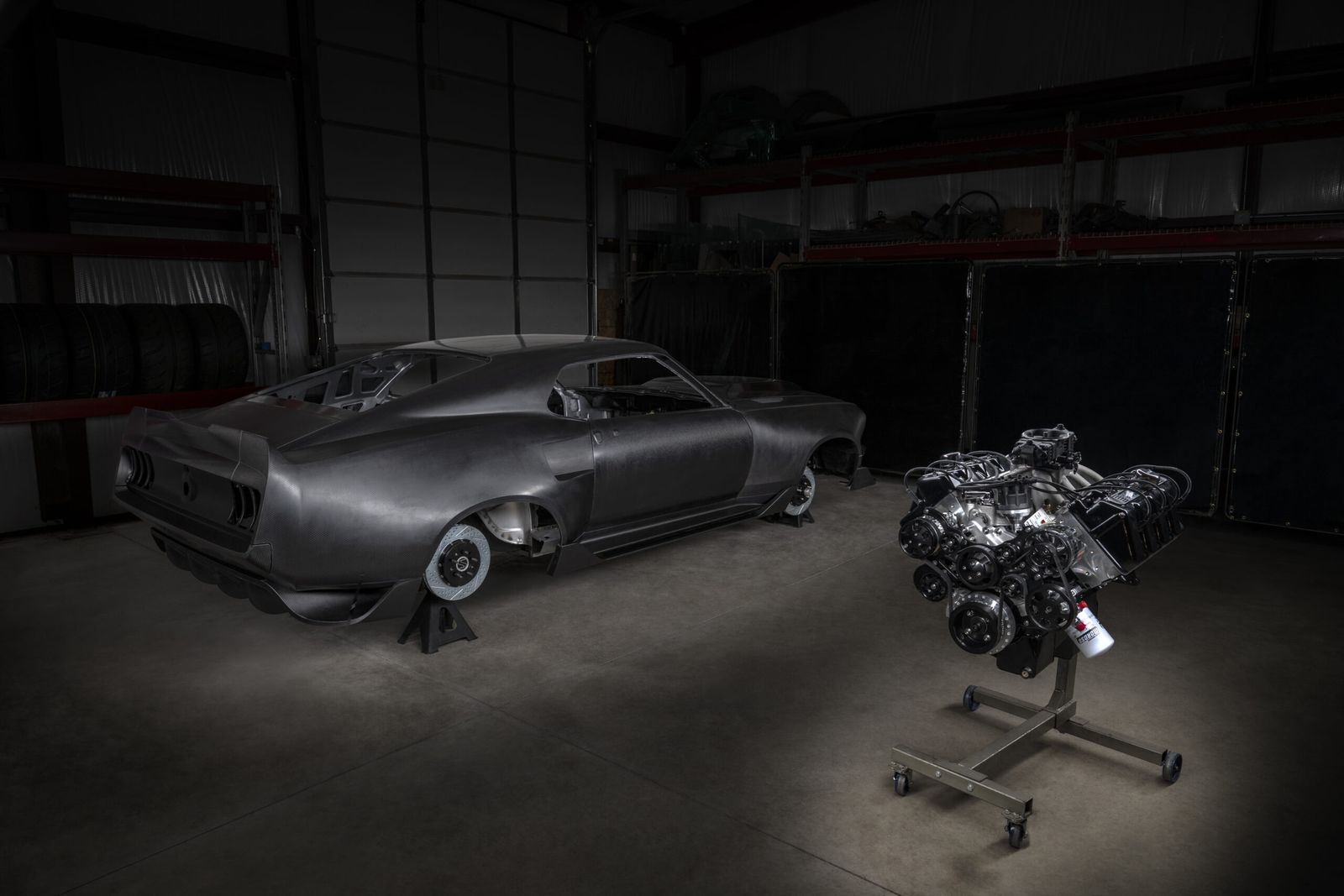
For Scorched, our widebody 1969 Mustang, the molds alone cost us about $430,000. That number doesn't include a single finished part. It's the price of getting the shape exactly right once, then being able to make it again and again.
That's the trade. A shop that hand shapes every car can start tomorrow with a sheet of steel. We spend the money up front, so every panel comes off the tooling with the same lines, the same gaps and the same surface, no matter who was at the bench that week.
Carbon on steel, so it still drives like a car
A carbon body doesn't mean a car with no steel in it. We bond the carbon onto a steel inner structure and paint it. The steel is the backbone. The carbon is the skin.
“It doesn’t rust. It doesn’t dent. It’s lighter. It’s stronger. What else do you want?”Jason Engel, founder
That's what the carbon skin buys you on a full build. It can't rust, and a parking lot door ding doesn't leave a mark. A well built steel car is a great car too, and we build plenty of them. Carbon is simply the more advanced, more precise way to build a body from a blank page.
The five and a half months you don't spend waiting
Because the panels come out of the mold straight, there's no bodywork stage in the old sense. Nobody spends a week blocking a quarter panel to chase a wave. On our builds that skips about five and a half months of fabrication time. That's months off your build calendar, and none of it shows up as a compromise in the finished car.
- Designed in CADEvery panel is a digital model before it's a physical part.
- Cut on a six axis machineFull size plugs, cut from tooling board.
- Bonded to steelA steel inner structure under a carbon skin.
- About 5½ months savedNo traditional fabrication and bodywork stage before paint.
Every restoration stays steel
Carbon fiber is how we do our full builds, the cars we design from a blank page. It is never how we restore a classic. Every restoration that comes through our shop stays steel, start to finish, because bringing a car back means bringing back what it was made of. Our Shelby G.T.350TR is a steel bodied car too, built to the same standard as everything else we make.
So here's the simple version. A full build is a modern car wearing a classic shape, and that's where carbon earns its place. A restoration brings back the classic itself, and the classic was steel.
Bold on purpose
We aren't trying to build the car that pleases everyone. A stock looking truck with a modern drivetrain is a great product, and other builders do it well. The F100 we're debuting at SEMA this year starts from that same idea and goes further. The entire body is carbon fiber, and it doesn't look stock. Not every buyer wants that, and that's fine. We build a small number of cars each year, for the people who do.
You spoke, and we listened. Scorched owners told us what they wanted changed, so we went back into the CAD files and changed it. That's Scorched R. With digital tooling, a change like that starts on a screen instead of on a welder.
Every trade under one roof
When a builder sends paint to one shop and wiring to another, every handoff is a chance for something to go wrong. Our compound in Yukon, Oklahoma runs 38,000 square feet across separate buildings, and each building does one job: metal fabrication, bodywork, paint, carbon bonding and assembly. The engine and interior work happens here too. Your car never leaves the property.
Two families, one shop
Trick Rides is owned by two families. My wife, Polly Engel, and I own it together with my partner, Jarred Morris, and his wife, Casey Morris. I'm the visionary, the one who dreams up the cars, but without Jarred none of this would have happened. Jarred can do every process in this shop himself, from metal fabrication and bodywork to paint, carbon bonding and assembly. That's a big part of why every trade stays under one roof here. All four of us pitch in, and we each do our part equally.
Built in Oklahoma, shipped around the world
I've been building cars for 28 years, and that includes shipping them overseas. We seal our own containers and handle the export paperwork and logistics ourselves. If you're buying from outside the United States, you get the same car, delivered, without hiring someone to figure out the freight.
Scorched has been covered by HotCars, Street Muscle, THE SHOP and FordMuscle.
Questions we get asked
Is a carbon fiber body better than steel on a classic car?
It's a different way to build, not a knock on steel. Carbon is the more advanced and more precise way to make a body: every panel comes off the same mold, bonded to a steel inner structure, lighter and rust free. Our restorations and our Shelby G.T.350TR are steel, built to the same standard.
Does a carbon fiber body rust?
No. Carbon fiber doesn't rust, so a carbon skin never needs the rust protection a steel body does.
How much time does a carbon body save on a custom build?
On our full builds, about five and a half months. Panels come out of the mold straight, so there's no traditional fabrication and bodywork stage before paint.
Are your restorations steel or carbon fiber?
Steel, every one. Carbon fiber is for our full builds. A classic we restore stays steel, start to finish.
Can you ship a finished car outside the United States?
Yes. We seal our own containers and handle the export paperwork and logistics in house.